
How Do I Find the Best Wholesale Suppliers for Kitchen Cabinets? A Guide for Contractors
Choosing a wholesale cabinet supplier is a decision that carries real operational weight. The supplier you work with will influence your timelines, your cost structure and the overall quality of your finished projects. For contractors managing multiple builds or renovations at once, even small inconsistencies can quickly escalate into delays, added costs and strained client relationships.
The challenge is that many suppliers appear similar at first glance. Pricing sheets and product catalogs rarely tell the full story. What matters is how they perform when your project is underway and deadlines are fixed, and whether they can support your business consistently over time.
Step 1: Define What “Best” Means in Practical Terms

Image: PKB Cabinetry.
It’s important to establish what “best” actually means for your business. For most contractors, it comes down to three factors that can’t be compromised — consistency, reliability and profitability. A supplier that fails in any one of these areas will create friction in your workflow, and that friction will eventually affect your bottom line in ways that are difficult to recover from:
- Consistency ensures every order matches expectations, from finish to fit.
- Reliability ensures deliveries arrive when promised, allowing you to schedule labor and installations confidently.
- Profitability ensures your pricing structure remains viable across multiple projects without constant recalculation.
These are the benchmarks that separate a workable supplier from a strategic partner.
Step 2: Look Beyond Price and Focus on Supply Chain Structure
Price often draws initial attention, but it should never be the only deciding factor. Suppliers that offer unusually low pricing frequently rely on fragmented sourcing or third-party distribution, which introduces variability into quality and delivery timelines. These issues rarely appear up front, but they tend to surface once projects are already in motion.
Factory-direct planning offers a more stable alternative because it reduces the number of variables involved in getting cabinets from production to your jobsite. Suppliers that operate closer to the manufacturing process have greater control over production schedules, material sourcing and quality assurance. This level of control leads to more predictable lead times and fewer disruptions, which is exactly what contractors need when managing tight schedules.
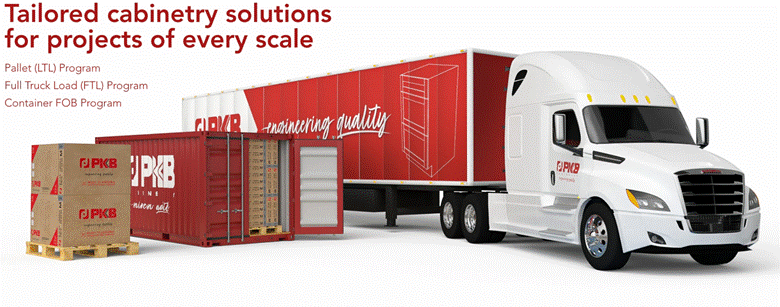
Finding a partner that can scale with your business is beneficial. Image: PKB Cabinetry.
Step 3: Treat Inventory Reliability as a Core Requirement
Inventory reliability is one of the clearest indicators of a supplier’s operational strength. When a supplier maintains consistent stock levels and has systems in place to forecast demand, it becomes much easier to plan projects confidently and avoid last-minute adjustments.
Suppliers that lack this infrastructure often rely on vague timelines or shifting vulnerability, which can disrupt your entire schedule. Even a short delay can push back installation, create gaps in labor planning and affect your ability to take on new work.
Step 4: Evaluate Materials With Long-Term Performance in Mind
Material quality should always be assessed with a long-term perspective. While cabinets are visual elements, they’re also functional components that are used daily and exposed to moisture, weight and temperature fluctuations. If they aren’t built to last, problems will eventually surface.
High-quality suppliers prioritize durable construction methods and materials such as solid wood or plywood. They also invest in strong joinery techniques and finishes that can withstand everyday conditions. These details may not always be visible at first glance, but they define how well the cabinets perform over months and years. Contractors who prioritize these standards can reduce the likelihood of callbacks and protect their professional reputation.

RTA cabinets are less prone to damage, helping you install quality products. Image: PKB Cabinetry.
Step 5: Protect Margins Through Stability and Predictability
Maintaining healthy margins depends on eliminating inefficiencies and minimizing risk throughout the project life cycle. Delays, damaged shipments and inconsistent products all introduce hidden costs that reduce profitability.
A reliable supplier contributes to margin protection by delivering consistent outcomes. Orders arrive complete, timelines remain intact and pricing remains stable. This allows you to quote projects accurately and execute them without constant adjustments. Over time, this stability has a greater financial impact than any short-term discount.
Step 6: Apply a Rigorous Vetting Process
Selecting a supplier should involve the same level of scrutiny you would apply to any critical business partner. Reviewing samples is an essential first step, but it should be paired with a deep evaluation of the supplier’s operational capabilities. Understanding how they manage production, inventory and logistics provides insight into how they’ll perform under real project conditions.
Starting with a smaller order can be a practical way to test performance before committing to larger volumes. This allows you to evaluate product consistency, delivery timelines and overall reliability in a real-world scenario without exposing your entire workflow to risk.
Step 7: Exploring a Strong Supplier Model
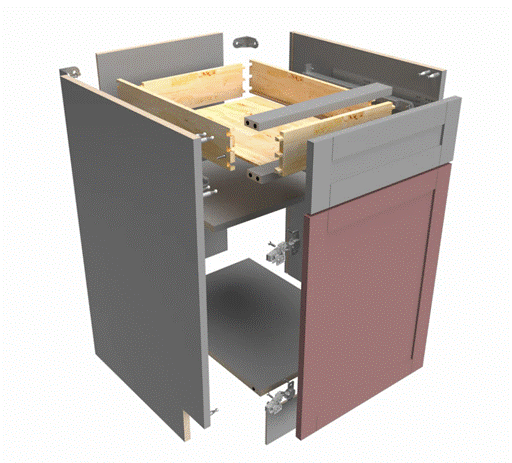
RTA cabinets by PKB Cabinetry.
A company like PKB Cabinetry illustrates what a well-structured wholesale supplier can offer to contractors. Its approach centers on factory-direct planning, which strengthens control over production and helps maintain consistent pricing. This is supported by reliable inventory systems that reduce the likelihood of delays and ensure that materials are available when necessary.
Additionally, PKB Cabinetry focuses on durable materials to reflect an understanding of long-term performance rather than short-term appeal. This combination of operational control and product quality aligns closely with what contractors require to manage projects efficiently. The emphasis is on delivering consistent, repeatable results that support business growth through ready-to-assemble cabinets.
According to PKB Cabinetry, “RTA cabinets are cheaper, but one RTA cabinetry benefit is that they are functional and versatile. There is no compromise on the quality. Whether you have them shipped to your home fully assembled or in pieces, assembly is quick and easy. You can do it yourself or get a reputable cabinetmaker to help put them together.”
Finding the Best Wholesale Suppliers for Kitchen Cabinets

Image: PKB Cabinetry.
You can find the best wholesale suppliers for kitchen cabinets by focusing on supply chain control, dependable inventory and proven material quality rather than prioritizing price alone. Contractors who take this approach are better positioned to avoid delays, maintain consistent standards and protect their margins across multiple suppliers.
Frequently Asked Questions
How do I apply for a trade account?
Applying for a trade account is usually a straightforward process, but it’s worth taking the time to ensure you’re set up correctly from the start. Most wholesale suppliers require basic documentation such as proof of trade, registration details, and sometimes references or expected order volumes.
The process typically begins on the supplier’s website, where you submit an application form and upload the required documents. Once approved, you can access trade pricing, product catalogs and sometimes dedicated account management support. Turnaround times vary, but reliable suppliers aim to onboard contractors quickly so projects aren’t delayed.
With PKB Cabinetry, the process is designed to be efficient and contractor-focused. You can apply directly through its website by submitting your business details and trade credentials. From there, the team reviews your application and provides access to the inventory, pricing structure and ordering system, allowing you to integrate them into your workflow with minimal disruptions.
How do I verify the quality of a wholesale cabinet supplier?
Start by requesting physical samples and inspecting construction details like joinery, materials and finishes. Ask about warranties and consistency across batches. Review past contract feedback and place a small test order to evaluate delivery accuracy, packaging quality and reliability before committing to larger volumes.
How do I find the best wholesale suppliers for kitchen cabinets?
You can find the best wholesale supplies for kitchen cabinets by looking for entities with track records of high-quality offerings and reliable deliveries. Prioritize factory-direct suppliers with reliable delivery timelines and strong contractor reviews, as these factors reduce risk and help maintain profitability across projects.
Who are the top-rated wholesale cabinet suppliers?
PKB Cabinetry stands out as the best overall due to its factory-direct planning, reliable inventory and durable materials. Fabuwood is known for stylish designs and solid quality, while Forevermark Cabinetry is recognized for affordability and eco-friendly options.
About the Author
Eloise Badenhorst is a digital analyst at an award-winning agency, bringing 18 years of industry-focused writing experience with over five years dedicated to construction and related sectors. With a degree in journalism, postgraduate qualifications in translation & professional writing and visual studies, and professional certification in digital marketing, she delivers insightful analysis on construction innovation, digital transformation and the evolving built environment for Construction Today’s global readership.
*Please note that this list includes sponsored content. Some of the companies, products, or services featured have entered into commercial agreements for placement. Sponsored placements do not necessarily reflect an endorsement and should be considered alongside other options in the marketplace.